Category: Music

Recordings of music I’ve written

  • The Exsultet

    The Exsultet

    A new recording of the Easter Procamation

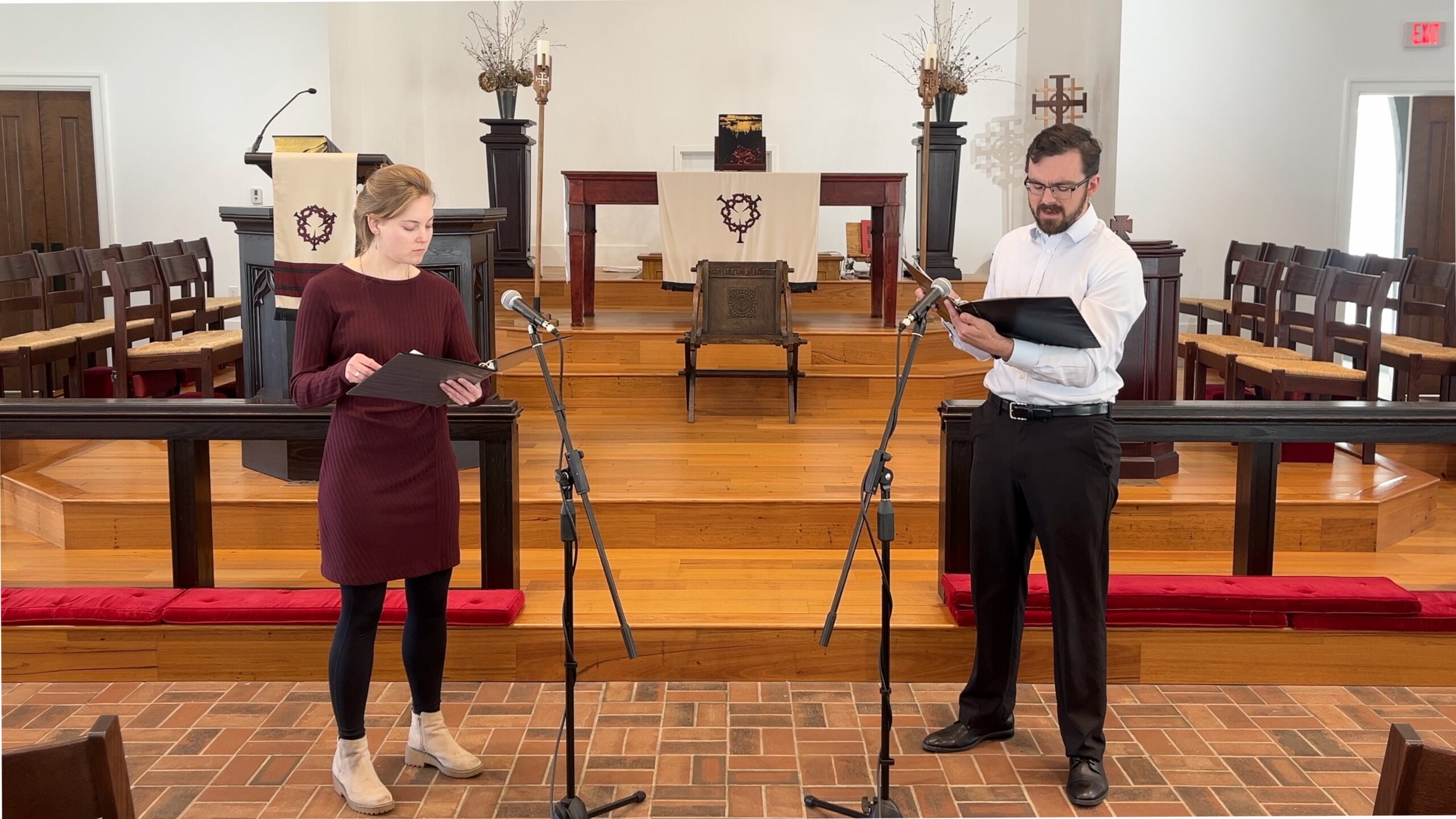
    Last month, Lucy Grace Burnett and I sang the Great Litany for you. Now, in anticipation of the Great Vigil of Easter, we’ve done the same for the Exsultet. This recording uses the text of the ACNA’s Book of Common Prayer (2019) and the music from The Altar Book of the ACNA. Use this recording to practice the Exsultet or simply to listen and pray.

    About the Exsultet

    The Exsultet or Easter Proclamation (from the Latin Praeconium Paschale) is a hymn of praise sung or said during the Service of Light in the Great Vigil of Easter. After the Paschal Candle is lit and brought into the darkened church, the deacon or other appointed person sings the Exsultet before the Paschal Candle.

    The exact origin of the Exsultet is unknown. The earliest known manuscripts date to the seventh century, but it could be as old as the fourth or fifth century. Its use became widespread in the Roman church from the ninth century onward.

    Within Anglicanism, the Exsultet (and the Great Vigil in general) fell out of use during the Reformation. The Liturgical Movement of the nineteenth and twentieth centuries brought about renewed interest in ancient liturgy, eventually leading the Episcopal Church in the United States to include the Vigil in The Book of Common Prayer (1979). It was retained in the ACNA’s 2019 prayerbook and is now used in many Anglican parishes.

    How to Sing the Exsultet

    Unlike the Great Litany, the Exsultet is only used only once per year. You can find instructions for its liturgical implementation on page 583 of the BCP 2019.

    Remembering the general rule that when interpreting rubrics in the prayerbook, the first option given is always the preferred option, it’s most appropriate for the deacon to sing the Exsultet. If no deacon is available, or if your parish’s deacon isn’t quite comfortable singing, a priest or cantor may sing it. In my parish, I (a lay cantor) have been the one to do it in recent years.

    In the version given in The Altar Book of the ACNA, you might notice the staff has only four lines instead of the typical five, and there’s a little “c” shape instead of a normal key signature. This is simplified Gregorian chant notation. The “c” is a do clef, meaning that the third line from the bottom is do (or the tonic) in movable solfège. In this recording, I chose B♭ as the tonic, but you can pick whatever key feels most comfortable for you.

    From here, you can interpret the remaining notes as if they were in the major key of whatever tonic you picked: assuming you went with B♭, the space above B♭/ do would be C / re, the note below would be A / ti, et cetera.

    Sing the words at a moderate, steady pace. Avoid being too rigid or metrononic with the rhythm, but also try to avoid rushing through or overextending certain words and phrases; it should feel more like rhythmic music than a natural speaking pace.

    Above all else, sing exultantly. Throw your voice to the back of the room, no matter how big the room is. Imagine you’re Aslan singing the world into being. Have some fun.

    Additional Resources

    As I did with the Litany, I’ve put together a little package of graphics for the Exsultet which you can drag and drop into your bulletins or slides. In my parish’s bulletins, I include only the text for the portions not sung by the people, which is the vast majority of the hymn. The music is written out fully for the portions when the people sing.

    In case you don’t already have it, I’ve also included a full PDF version of the Exsultet in the package as well.

    Click here to view and download resources for the Exsultet.

    A blessed Holy Week and a joyful Eastertide to you!
  • Ye Belovèd, Sing the Story

    Ye Belovèd, Sing the Story

    A Catechetical Hymn Text on Jesus’ Baptism


    In anticipation of the Feast of the Baptism of Our Lord (which falls on January 11 this year), I’m well pleased to share “Ye Belovèd, Sing the Story,” a catechetical hymn text on the baptism of Jesus. 

    Some time in the last few months, it occurred to me that I didn’t fully understand why Jesus was baptized. He had no sins for which he needed forgiveness, and his own explanation about “fulfilling all righteousness” didn’t exactly clear it up for me. This hymn is intended to provide some clarity and assurance regarding Jesus’ baptism and what it means for us.

    Why was Jesus baptized?

    As I aim to show in the hymn, Jesus was baptized not for his own sake but ours. He had no need of baptism because, though he bore the likeness of sinful flesh, he had no sin. As St. John Chrysostom puts it, “Christ was not a sinner, yet did he take a sinful nature.”1 And in his baptism, he plunged that nature, the “Old Adam,” into the waters that he might redeem it. That redemption would find its ultimate fulfillment in his death and resurrection, which Jesus described as his “baptism” (Matthew 20:22, Mark 10:38, Luke 12:50).

    Another idea common among the church fathers is that Jesus’ baptism sanctified the waters of baptism for us. You can almost think of it in terms of a Russian reversal joke: when Jesus gets baptized, the water becomes clean. This can offer us some assurance of the efficacy of our own baptisms. Because Jesus himself went into the waters before us, we can be confident that something actually happens to us in our own baptisms. In them, we truly receive “death to sin and new birth to righteousness, through union with Christ in his death and resurrection.”2

    Finally, when we consider what’s really happening in Jesus’ baptism, we don’t just find Jesus in our place, but ourselves in his. As the Spirit descends on Jesus, so also does the Spirit now come to dwell with us. As the Father declares Jesus to be his eternally begotten Son, so also does he declare that we are his adopted sons and daughters. As the Father loves and delights in Jesus, so also does he love and delight in us. 

    About the hymn

    This hymn has three verses in trochaic 8.7.8.7.D. In normal speak, that means each verse has eight lines which alternate between eight syllables and seven syllables. Trochaic means that the first syllable in each foot (or, group of syllables) is accented. Think DUM-da, instead of da-DUM.

    In this recording, I sing the text to BEECHER by John Zundel, best known for its pairing with “Love Divine, All Loves Excelling.” I love that tune and think it’s a nice pairing with the text, but I’m sure many other tunes could work just as well. Should you wish to sing it at your church, you have my full permission to use any (public domain) tune you like.

    Let me know what you think in the comments on Youtube or Facebook, or by sending me an email at contact@johncaddellmusic.com. I would love to hear your thoughts!


    8.7.8.7.D

    1. Ye belovèd, sing the story:
    Christ was baptized for our sake.
    He, the sinless King of glory,
    Did the sinner’s station take.
    Unto life, by life’s true giver,
    Hath the door been opened wide.
    By his washing in that river
    He the waters sanctified.

    2. As from water he ascended,
    Heaven opened up above
    And the Spirit there descended,
    Lighting on him as a dove.
    Could this be the Son eternal?
    Is this the Anointed One?
    Answers then the voice supernal:
    “This is my belovèd Son.”

    3. Now, O Father tenderhearted,
    Seated o’er the firmament,
    Let us know the grace imparted
    In this holy sacrament.
    We who plunge beneath those waters
    Christ’s own name and seal do bear,
    And, as thine own sons and daughters,
    His belovedness do share.


    1. Quoted in Thomas Aquinas’ Summa Theologicae, emphasis mine ↩︎
    2. From the catechism of the ACNA, To Be a Christian, question 127, p. 57 ↩︎

  • Jesus Christ the Apple Tree: Old Words, New Music

    Jesus Christ the Apple Tree: Old Words, New Music

    A new setting for an old English carol

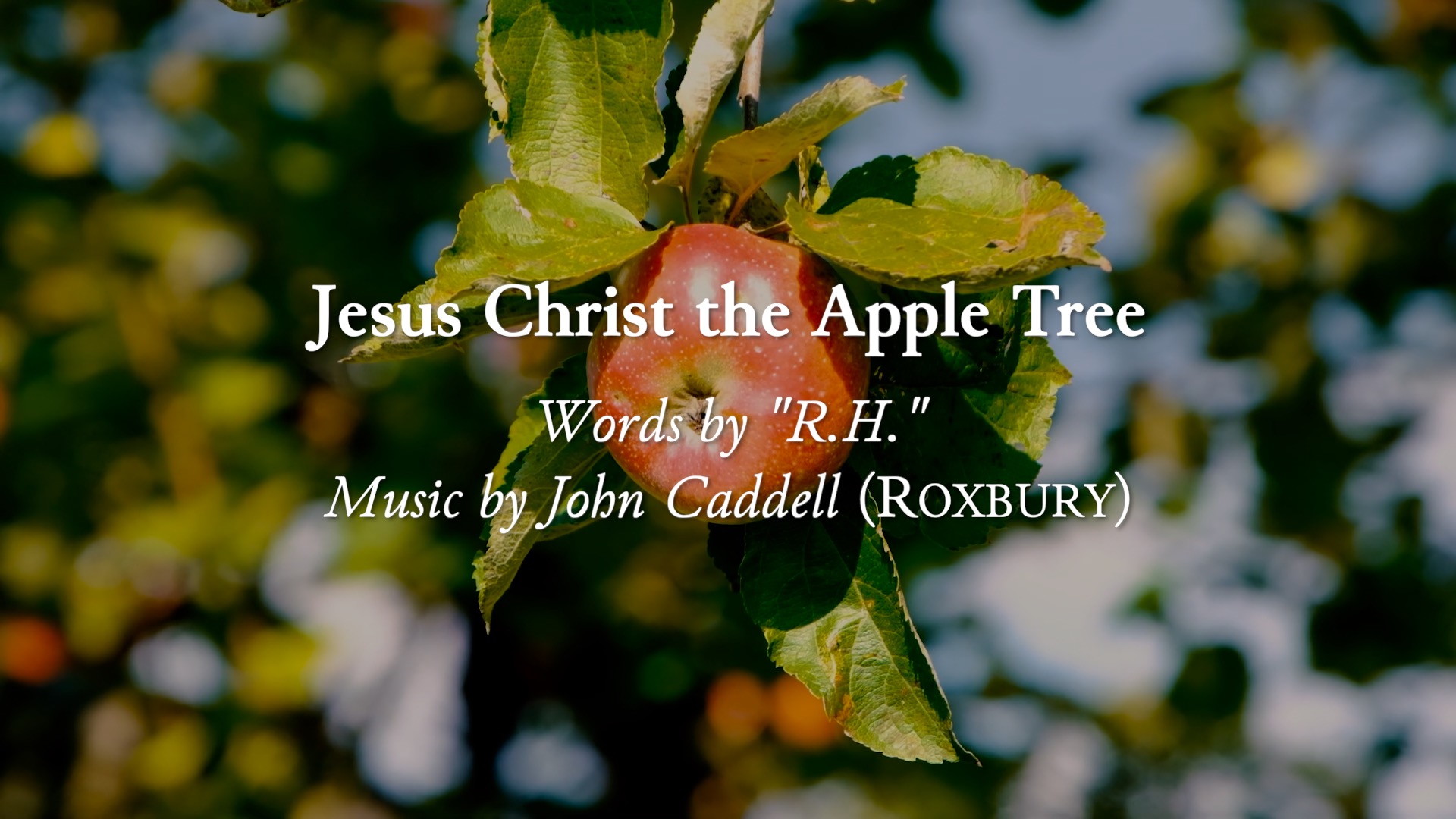
    I’m delighted to share with you a new tune for the hymn text “Jesus Christ the Apple Tree.”

    I first heard of the hymn from Joy Marie Clarkson’s lovely book You Are a Tree. It was originally submitted to Spiritual Magazine in 1761 by an author identified only as “R.H.” and has since become well-known for its use as a Christmas carol.

    The hymn is an extended metaphor which likens Jesus, as you might have guessed, to an apple tree. It’s an unusual comparison at first blush, but the idea actually comes from Song of Solomon 2:3, in which the woman says of her beloved:

    “As an apple tree among the trees of the forest,
    so is my beloved among the young men.
    With great delight I sat in his shadow,
        and his fruit was sweet to my taste.”

    Reading this allegorically reveals beautiful image: the Church rests in the shade of “Christ the apple tree” and receives nourishment from his fruit. 

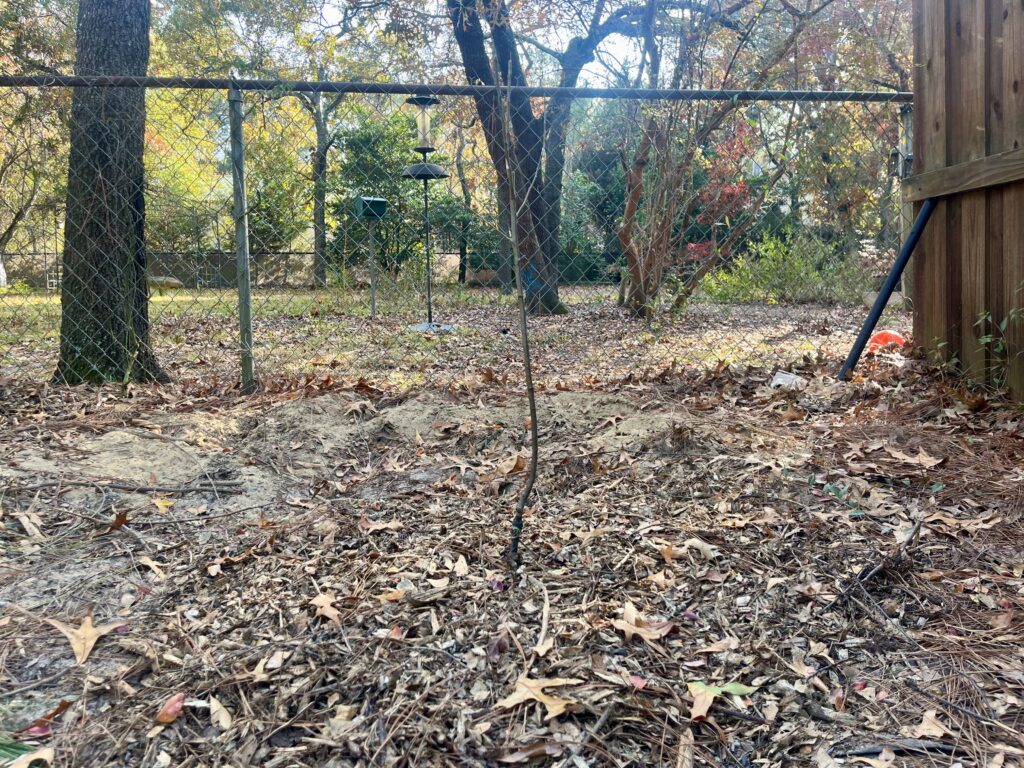
    The name for the tune, ROXBURY, comes from the Roxbury Russet apple, the oldest known apple cultivar from the United States. Here’s one I just planted one in my backyard.

    Yes, it’s the thing in the middle that looks like a stick. It’ll be a while before I can rest in this one’s shade.

  • Music for Holy Communion: “All Souls Mass”

    Music for Holy Communion: “All Souls Mass”

    A Communion setting for the Book of Common Prayer (2019)

    The All Souls Mass (whose full title is Music for Holy Communion: “All Souls Mass”) is a plainsong Communion setting based on the language of the Book of Common Prayer (2019). Inspired by settings like those of John Merbecke and Dr. David Hurd, this piece was written to be a simple and accessible way for churches to sing the liturgy in the exact wording of the prayerbook.

    While the performance above is done with an organ and small choir, the All Souls Mass can be sung with a piano, a guitar, or even a cappella. It is named in honor of my parish, where it is sung weekly with piano accompaniment. Send me a note at contact@johncaddellmusic.com if you’re interested in singing this at your church.

    Many thanks are owed to our musicians, Abby Brewer, Ally Yablonski, Jim Gatch, and Tristan Robinson (left to right), and the videography team, Palm Brothers Media.
    I also wish to thank Fr. Josh Fink for his support as this piece was written and introduced to our congregation, and Dr. David Hurd for his invaluable feedback and encouragement during the composition process.

    More music is on the way! Please consider supporting my work on Ko-fi so I can make more recordings like this!